How to Calculate Your Moving Volume (m³)
Calculate packed volume from dimensions and distinguish the geometric total from required vehicle space. Includes a box example and quote preparation.
Calculate packed volume from dimensions and distinguish the geometric total from required vehicle space. Includes a box example and quote preparation.
Start with consistent units
Volume is length × width × height in metres. A 60 × 40 × 40 cm box is 0.60 × 0.40 × 0.40 = 0.096 m³. Ten identical boxes total 0.96 m³ geometrically. Multiplying centimetres does not directly produce a cubic-metre figure.
Measure furniture in its transport state
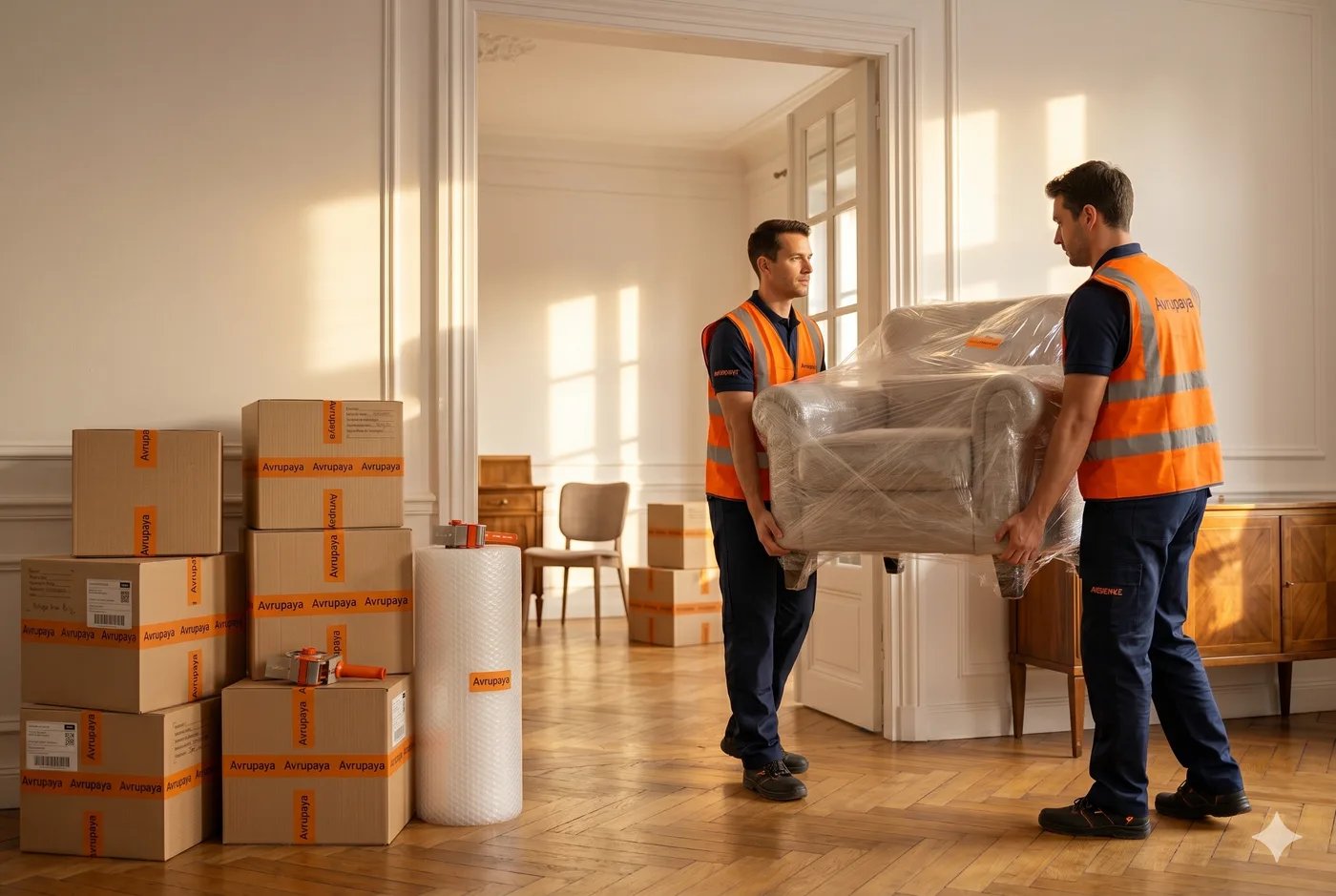
If table legs come off, consider the top and leg package separately. Use outside dimensions for a sofa travelling in one piece. Protective packing can increase measurements, so label unpacked dimensions. Rounded, projecting or non-stackable items load differently from rectangular boxes.
Keep missing measurements visible
Do not delete an unmeasured wardrobe from the inventory. Keep it flagged for the survey. The inventory tool totals valid measured rows. If any dimensions are missing, the total is not the full household volume. Volume alone does not produce a transport price.
Written-quote preparation checklist
- Collection and delivery cities, postcodes, floors and lifts.
- Packed inventory with unknown measurements and sensitive items flagged.
- Earliest collection and your available receiving window.
- Included and excluded packing, assembly, storage and other requirements.
Collect your details in the planning tool. Your prepared brief appears when you open the quote form, where you can review or remove it. Keep your reference after submitting. Our team will clarify missing details and the written service scope with you.
Apply this guide to your move
Share your route and inventory so we can clarify the scope.